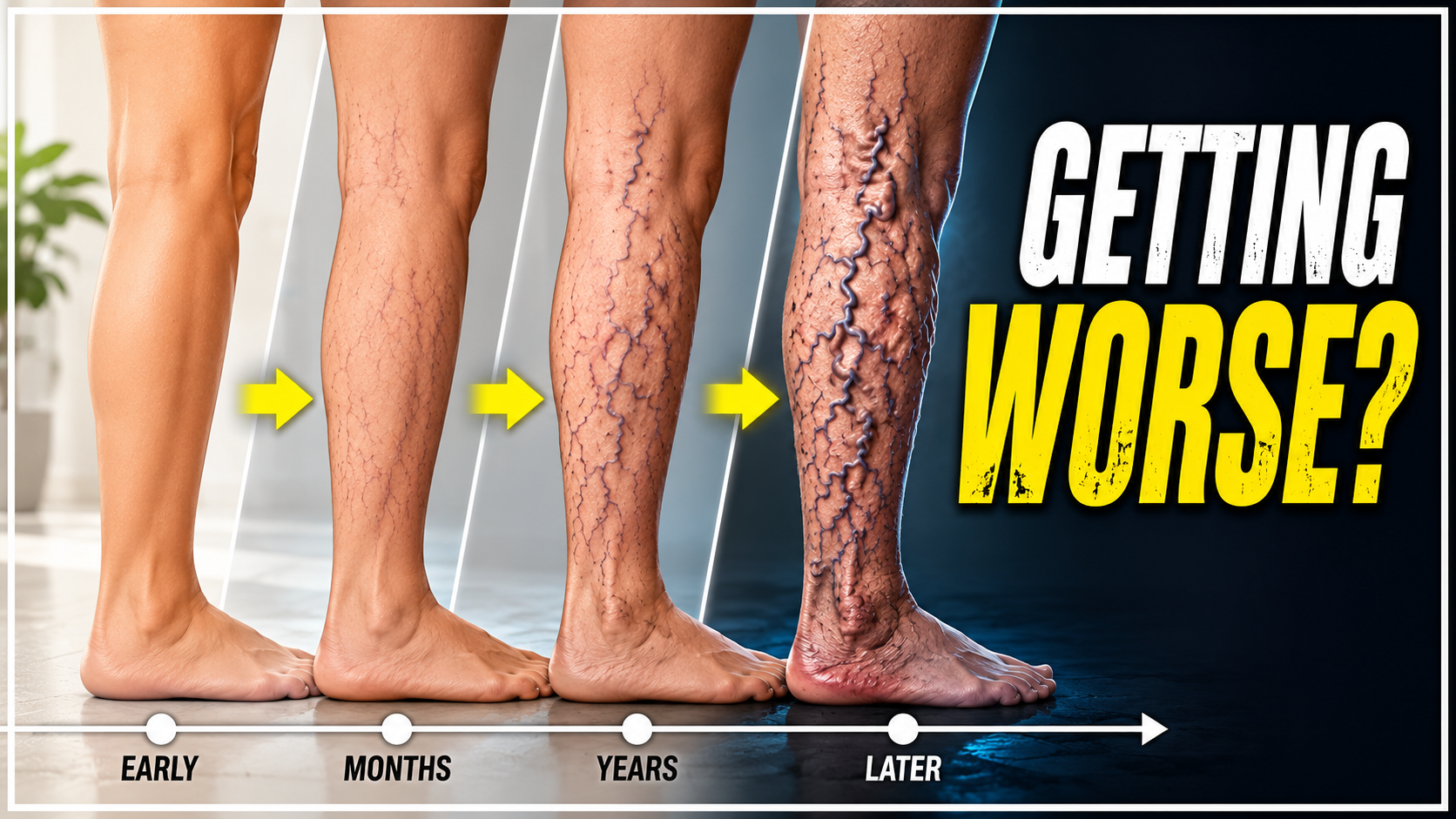
Varicose veins become more visible over time because the valves inside the veins gradually weaken, allowing blood to pool instead of flowing efficiently back to the heart. As pressure builds within the veins, they stretch, enlarge, and become increasingly noticeable beneath the skin.
Although this progression is usually gradual, early recognition and timely treatment can help manage symptoms and reduce the risk of complications.
Many people first notice only a few small blue or purple veins, but months or years later they may appear larger, more twisted, and more prominent. Understanding varicose veins helps explain why this condition tends to progress and why visible changes often reflect underlying vein dysfunction rather than simply aging.
Why Do Varicose Veins Gradually Become More Noticeable?
Healthy leg veins contain one-way valves that help blood travel upward toward the heart.
When these valves weaken or become damaged:
- Blood flows backward instead of upward.
- Blood collects inside the veins.
- Pressure inside the veins increases.
- The vein walls stretch over time.
According to the National Institute for Health and Care Excellence (NICE), persistent venous pressure is one of the primary reasons varicose veins gradually enlarge.
Does Blood Pooling Make Veins More Visible?
Yes.
When blood remains inside the affected veins for longer than normal, the veins expand.
This may cause them to become:
- Larger
- Twisted
- Raised above the skin
- Dark blue or purple
As the vein enlarges, it becomes easier to see through the skin.
Why Does the Condition Usually Progress Slowly?
Varicose veins often develop over several years rather than suddenly.
Progression depends on factors such as:
- Aging
- Family history
- Pregnancy
- Prolonged standing
- Obesity
- Reduced physical activity
Each of these factors can place additional pressure on the veins, gradually worsening valve function.
Can Daily Activities Make Varicose Veins More Noticeable?
Yes.
People often notice their veins becoming more prominent after:
- Standing for long periods
- Sitting without movement
- Hot weather
- Long-distance travel
These situations can increase venous pressure and temporarily enlarge already weakened veins.
Why Do Symptoms Often Increase as Veins Become More Visible?
As venous pressure rises, symptoms may become more noticeable alongside the visible veins.
Common symptoms include:
- Aching legs
- Heaviness
- Swelling around the ankles
- Burning sensations
- Night-time cramps
- Itching near the affected veins
According to the Society for Vascular Surgery, symptoms often reflect the underlying severity of venous disease rather than the appearance of the veins alone.
Can Small Spider Veins Become Large Varicose Veins?
Spider veins and varicose veins are related but not identical.
Spider veins are usually:
- Smaller
- Flatter
- Closer to the skin surface
Varicose veins are:
- Larger
- Bulging
- Caused by deeper vein valve dysfunction
Although having spider veins does not always mean varicose veins will develop, both conditions may occur together.
How Do Doctors Evaluate Progression?
Doctors begin with:
- Medical history
- Physical examination
A Duplex Ultrasound is commonly performed to assess:
- Blood flow direction
- Valve function
- Vein anatomy
- The extent of venous disease
This imaging test helps identify the cause of visible veins and guides treatment planning.
What Treatments Can Prevent Further Progression?
Treatment depends on the severity of vein disease and ultrasound findings.
Management options may include:
- Lifestyle modifications
- Compression stockings
- Endovenous Laser Ablation (EVLA)
- Radiofrequency Ablation (RFA)
- Ultrasound-guided sclerotherapy
- Ambulatory phlebectomy in selected cases
These minimally invasive procedures close the diseased veins, allowing blood to flow through healthier veins and helping prevent further progression.
When Should Someone Seek Medical Advice?
Medical evaluation is recommended if varicose veins become increasingly visible or begin causing symptoms such as:
- Persistent leg pain
- Swelling
- Skin discoloration
- Itching
- Bleeding from a vein
- Slow-healing ulcers
Early diagnosis allows doctors to recommend treatment before chronic venous disease becomes more advanced.
Conclusion
Varicose veins become more visible over time because weakened vein valves allow blood to collect inside the veins, increasing pressure and causing them to enlarge gradually. As the condition progresses, the veins may appear more twisted and raised while symptoms such as heaviness, aching, swelling, and fatigue also become more noticeable. Visible veins are often a sign of underlying venous insufficiency rather than simply a cosmetic concern.
The good news is that modern Duplex Ultrasound enables doctors to accurately evaluate vein function and recommend personalized treatment. Minimally invasive procedures such as Endovenous Laser Ablation, Radiofrequency Ablation, and other image-guided therapies can effectively treat diseased veins while improving circulation and relieving symptoms. Individuals seeking advanced vein care can consult a best doctor for varicose veins in Jaipur to learn more about suitable treatment options.
Frequently Asked Questions
Why do varicose veins become larger over time?
They enlarge because weakened vein valves allow blood to pool inside the veins, increasing pressure and stretching the vein walls.
Can varicose veins continue to worsen if left untreated?
Yes. In many people, the condition gradually progresses, leading to more visible veins and increasing symptoms over time.
Does standing for long hours make varicose veins more noticeable?
Yes. Prolonged standing increases pressure inside the leg veins, making existing varicose veins appear more prominent.
How do doctors determine how advanced varicose veins are?
Doctors typically use a physical examination and Duplex Ultrasound to evaluate vein function, blood flow, and the extent of venous disease.
Can minimally invasive treatment improve the appearance of varicose veins?
Yes. Treatments such as Endovenous Laser Ablation and Radiofrequency Ablation close the affected veins, improving both symptoms and their visible appearance over time.